Trust Arrives on Foot: Sage's AI Philosophy with Manav Thiara
There may be errors in spelling, grammar, and accuracy in this machine-generated transcript.
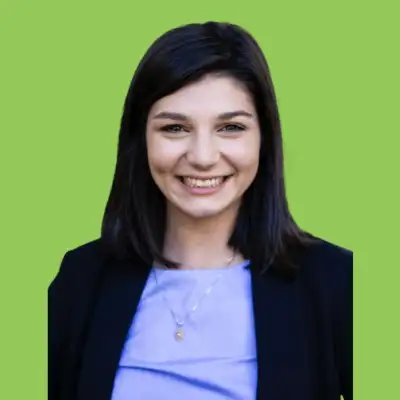
Emily Madere: Hello, all of our all of our listeners, welcome to the unofficial but feeling very official Sage Intacct podcast. Um, we are here in beautiful San Francisco, filming on the main stage at Sage future. Like Matt, how do you, how do you feel we went from filming this in like our basements and, and now we're here.
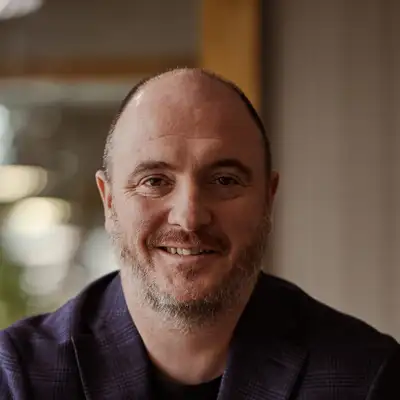
Matt Lescault: Maybe your basement. I, I, I, I focus [00:00:30] on filming in my office. Uh, personally now this is amazing. Um, you know, first of all, uh, I've mentioned to you before I look at Sage futures, our Super Bowl, um, we get to see so many people that we, that, that we get to work with on screen for.
Emily Madere: Yeah, we really get to see how tall people are.
Matt Lescault: Or short.
Emily Madere: Or short. That's right. You just look me up and down. That's right.
Matt Lescault: And, uh, you know, I, I just think that having the opportunity here to, to meet people, to talk [00:01:00] to people and, uh, have this type of, I would say aura is amazing.
Emily Madere: Yeah. Have you heard of the frame, the heart of the phrase aura farming? We're definitely doing that right now. Okay. You need to look it up. But anyway, anyway, we have a very special guest. So, Manav, I do not want to do you disservice. Will you please, please introduce yourself?
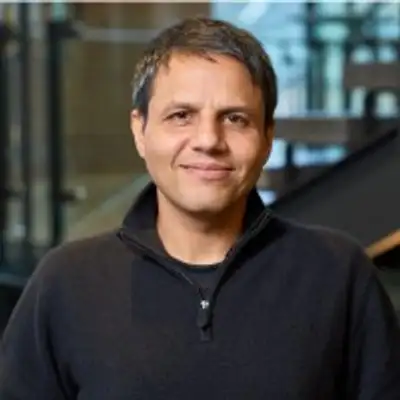
Manav Thiara: Well, hello, Emily and Matt. Um, thank you for having me. And I am Manav Thiara. I am a senior vice president of data and AI at Sage and a technical fellow. [00:01:30]
Matt Lescault: Okay, hold on before you go. I know where you're going, but he. He told me something beforehand. He told me what his name meant. I wanted to tell everybody.
Emily Madere: Yeah, that that's a good story.
Manav Thiara: All right. Well, it's a North Indian name. The full name is Manav Preet, which is two syllables, Manav and Preet. Manav means human. Preet means lover. So the name means lover of humanity or.
Matt Lescault: Or just human love.
Manav Thiara: Or human love.
Matt Lescault: Which means that you must bring the human love into AI. [00:02:00]
Manav Thiara: I do absolutely and and ironically, this is actually very much tied to Sage, which is being human in the loop and have everything built on trust, which is all about humans.
Emily Madere: That's right. They we have heard a lot about, um, trusting AI just in this conference already, but kind of tell me your take on AI and what you've taken away from this conference and what you could continue to work on.
Manav Thiara: I think, one, you know, I've spent my entire career in engineering and technology, and I've been in AI before. Ai was called [00:02:30] AI before, uh, in the early 2000.
Emily Madere: What was it called?
Manav Thiara: It was just software development, engineering and good old machine learning and coding. There was no big data. There were, you know, no buzzwords around, you know, the generative AI and, and artificial intelligence and, and all that. And to me, this is a fascinating time, truly, where it's been kind of my mission for a long time that how can we democratize the whole space of AI and frankly, broadly [00:03:00] speaking, mathematics and physics, which is what I'm very super, super passionate about. And to me, generative AI has done that. And, and bringing it back to Sage, what's been really exciting and as you mentioned, you've heard this throughout here in the last two days, and you will hear more is the trust, trust, trust. That is something which I believe say it is very unique to Sage where everything we are doing, AI is still, at the end of the day, a tool and a technology, but not the end to itself. It is just a means to that end on how do we help our [00:03:30] customers go faster, bring things cheaper, increase their revenue. But it is all centered around is it trustworthy? Is it something that you really understand and you have it auditable, and you can really put your money behind it to say, well, okay, yes, I believe in this. And that is at the heart of what Sage believes in.
Matt Lescault: Okay. Hold on. We need to rewind this a little bit. Can you tell us a little bit more about what your role is specifically?
Manav Thiara: Yes, yes, so I am.
Emily Madere: Give me give me the official and unofficial version of that.
Manav Thiara: So [00:04:00] I think it's it's sort of like officially. Yes. The title is Technical fellow. And what that really means unofficially is somebody who's obsessed with engineering and technology. Uh, that is what I am obsessed with. And day in, day out. And then my kids and my family actually kind of make fun of me that I tell them that mathematics, for example, is the way of life. It is not a subject. And they're like, dad, yeah, this is crazy. Um, but officially what that means is how do we think about the architecture? [00:04:30] How do we think about the day to day coding and development, and how do we provide those features in the hands of our customers, but do it in a way which is not only trustworthy that we talked about, but we also do it in a scalable way. How do we do it in a way that internally in Sage, you know, it is cost effective to provide those solutions to the customers? What are the best technologies to do that? Who do we partner with? It encompasses all those things to think about. Ultimately, how do we put those features in the hands [00:05:00] of our customers? That's really what what my role is, is to bring it all together architecturally, engineering wise, technology wise, uh, and do it in a way which is not only scalable, but also really fast, because technology is changing so rapidly that we also cannot wait for months or years to launch something. So how do we do it really, really fast in an agile way? That's kind of my job, I'd say.
Emily Madere: But also maintain that trust.
Manav Thiara: And maintain that trust. Yeah. No matter what we talk about here, like that is the centerpiece of every [00:05:30] single thing we do, is the trust and the confidence in the data and the services that we provide to our customers.
Matt Lescault: Okay. And we were talking before we got to this table, and you're really deploying this across multiple products. And so I guess for the Sage Intacct or unofficial Sage Intacct podcast, but Sage is a company intact as a product and Sage has numerous products. And so tell us a little bit about your role and how expansive that goes across the complete [00:06:00] product ecosystem within sage.
Manav Thiara: Yeah. No, absolutely. Sage is, is, uh, you know, has a variety of products across accounting, HR, payroll, and my team is a horizontal team, meaning we support all the different products across the globe. Uh, and, and here's the interesting part that while the products are different, catered to each market and each persona and each customer base, but it's really all underpinned by the sage platform. And that's where my team team drives that value [00:06:30] is around how do we do it? Consolidate it all into one data and then data platform. How do we bring those services that are reusable so that it's not just one product, but the look and the feel, and that whole trust and confidence comes in every single product. Uh, and then actually on that note, you know, as, as you heard about it this week, I'm sure it's our HCM products, where we are now tied it with the intact. And we have heard from several speakers this week as well that in an in a organization, for example, in [00:07:00] a media market, it's. The CFO, for instance, is not just looking for finance, right? The CFO is looking for across the continuum of the organization that has the workforce planning happening. How is the forecasting happening? And this is where Sage has brought it all together to say that, well, even though the products are different, but we give one view to the CFO so that the CFO can truly understand the health of the entire organization.
Matt Lescault: But hold on, hold on. There's all these different products globally, and your team looks after [00:07:30] all these products globally. I, as a lay person that doesn't know a ton of stuff goes like, how do you decide what percentage of time or resource gets allocated by product? But you said something just now that you're trying to do it in a way that allows for the deployment of of that work from your team to be deployed agnostically across products. Is that is that what I'm hearing?
Manav Thiara: That is absolutely correct. [00:08:00] Really good catch. And, uh, you know, if, if you heard today's keynote about from our CTO, Aaron Harris, we have a concept called the Sage AI factory. And that is at the core answers. What you were asking, Matt, is that how do we do it in a way so that we don't have to? Each team doesn't have to do it again and again. So we do it in what we call the AI factory, that we do it in a repeatable process way so that if I can, if I've done it for intact and that service is available for intact product, it automatically integrates with the payroll [00:08:30] and accounting products as well. And that is kind of our secret to say, well, this is powered by the Sage platform so that you do it once and then you reuse it across Sage because otherwise, to your point, it is not scalable to do it, you know, ten times. And of course, it will be ten different ways and different errors and all that.
Matt Lescault: Interesting.
Emily Madere: So I work, um, I talk to, to prospects and customers, uh, all the time. And having that single source of truth is, is really important because I mean, as we know, the accounting and finance industry, there are [00:09:00] less people graduating with accounting degrees and they're really seeing that strain. So having the one source of truth is really important to them.
Manav Thiara: It is absolutely critical. And I kind of joke, uh, I have been in the data craft my entire career data and AI craft. And I feel for the longest time in the data space, we were kind of talking about the conceptual stuff around the frameworks and governance and all that, but it really didn't tie to the business outcomes. What's beautiful these days is that with the generative AI, with the, you know, two and a half, three years ago, [00:09:30] when the ChatGPT and all those things came up, I think this is the time. This is the time for data now that now truly we can take that one source of truth, which powers all the agents and the context and all that. And this is how, again, we are doing it through our Sage platform.
Emily Madere: So Sage is doing a lot with AI. If you could break it down into some buckets for our listeners, what would you break it down into?
Manav Thiara: Where do I even start? Honestly, it's even, even if you think about this week, um, you know, if I can count [00:10:00] probably at least 7 or 8 big announcements that we are doing the HCM, we're introducing that and the integration with the Sage Intacct platform. Uh, we are, you know, expanding our Sage advisory services. And in fact, we have partnered with PwC to help, you know, customers on board the intact faster. We are partnering with PwC to take what we call the black box, where you don't really understand what AI is doing to what we call the glass box so that everything is transparent. Uh, we are creating AI agents [00:10:30] across the workflows. We are integrating across the workflows, different AI stuff. We are, you know, expanding our AI developer platform for our partners and coming up with different commercial, you know, arrangements. So it's literally everything we are doing is, is I'm quite proud to say that we are a AI first company inherently now.
Matt Lescault: Whoa whoa whoa. So I need a. I need a start from a high level and try to break this down a little bit. So first, what I keep hearing from Sage is AI is [00:11:00] not going to replace the human right. But then I hear I read an article and Microsoft's executives are saying that in 18 months, AI is going to replace all white collar work. Why am I hearing such different kind of messages between between organizations like this?
Manav Thiara: I think it's at the heart, frankly. This is the differentiation at Sage. What we have always been consistent in our messaging is that AI [00:11:30] doesn't really replace or displace human beings, but it truly takes human beings to the next level of the work. And I have seen it in my career as well. Ten years ago, this whole concept about RPA, which was robotic process automation, came and the concept in the market was, again, the same kind of fears that there are no human beings needed. What we have seen at that time, and now we see at Sage and talking to our customers, and we have heard from some of the CFOs, even, you know, this week at Sage future, there are there are so many mundane tasks, [00:12:00] repetitive tasks in each job that AI can automate the workflows so that those human beings can now do a higher value task. And it might be different for each different job. And yes, there will be some disruption and new job categories will happen. But with Sage, the unique thing which we are really focused on is that while you do all of this, human beings are still very much central to that confidence and, and not in a way where human beings are manually looking at every single thing, but with the help of humans. One, we have built the controls [00:12:30] and the guardrails even in our automation. So that's the one human element. And the second human element is that depending on the workflow, we have the exceptions that it can go to the humans and it can be validated and human beings can override if something doesn't seem right and or human beings can also exactly see and have the entire auditability trace so that we can explain how things are calculated.
Matt Lescault: Okay. So I'm going to take Sage out of the equation. Yeah. When you hear a statement [00:13:00] like that, you know, in 18 months, white collar work is going to be is going to be.
Emily Madere: I saw that on, on billboards when I was ubering in.
Matt Lescault: Yeah.
Emily Madere: It's everywhere.
Matt Lescault: So what what is what if you're sitting at home and you're thinking about this, what does your mind go to? Forget the same side of it. What do you believe?
Manav Thiara: I do not believe human beings will ever be taken out of the equation. Um, there are several things. One, uh, I will sorry. Go back to a little bit of Sage, which which I strongly believe in that when something happens in [00:13:30] the boardroom and we heard this this week as well from our CEO and others in the boardroom, they are not going to call the agents and say, well, tell me this so and so, agent, why is this happening? You will call the human beings and human beings will remain accountable. Now, broadly speaking, if we do take Sage out of the equation philosophically, I strongly believe if you look at the evolution of humanity, uh, you know, thousands of years ago, I think as a species, we are quite innovative to stay relevant. So what happens to us is that while [00:14:00] we automate these other things, we will definitely figure out other job roles, which we already have.
Emily Madere: You adapt.
Manav Thiara: Yeah, we adapt and we do other things. I also, by the way, do not personally buy into the view that we will all just have no jobs and, and or we will have such a amazing world where all of us sit on the beach and, and, you know, are sipping margaritas and all day or nonalcoholic drinks, whatever you might choice might be. There will be people who will just figure out, well, we have all this time, how can I make this better and keep on improving? That's what [00:14:30] I believe, that the human species will continue always evolving, like you said.
Emily Madere: Yes.
Matt Lescault: Now, I tend to be in your camp. Absolutely. Because I look at and I think you said it, uh, that Technology has always elevated us, and AI is just another technology that will continue to elevate us. And it's our job to, as we've just talked about, adapt into what that means. And it's going to be the person's choice, whether they're willing to go on that path to adopt or, or become irrelevant [00:15:00] themselves. But that's not the fault of technology. That's the fault of the individual. Is that a fair statement?
Manav Thiara: 100%. And and and frankly, again, a little bit philosophically, I strongly believe if you look at, you know, a few hundred years ago before the whole technology came, and even not even AI, but generally technology and computers, I strongly believe that as, as humanity, as human beings, we are much better off today than where we were 5000 years ago. And I do believe that we will be in a better spot 50 years from now. What that means obviously, [00:15:30] it's anybody's guess.
Matt Lescault: And so now I want to go one layer deeper on this. And one of the things that was announced here was kind of the, uh, partnership with AWS and the agent Corps. Now, before I ask the question.
Emily Madere: A huge announcement.
Matt Lescault: What what do you think about that? What does that mean to you?
Emily Madere: I don't know, I kind of want to hear it from, from your perspective first, just because you're you're in this, you probably worked with AWS to help develop this. So I kind of want to hear from [00:16:00] you first and then I'll kind of bring them up.
Manav Thiara: No, absolutely. And, and yeah, actually along with me, there are several teams that have worked. And it does take a village to bring everybody together and launch some of, you know, these big partnerships. And to me, AWS brings the scale and the technology and the infrastructure where we can truly develop agents at a scale that was not possible without the agent corps. So I think this truly gives the power to not only the Sage ecosystem, but not only Sage employees, but the entire ecosystem to leverage those agents and all our ISVs [00:16:30] and all our partners and then have them available. And, you know, in the marketplace where now they can create their own agents. On top of that, I think it is. You're actually absolutely right. This is huge.
Emily Madere: And so can you can you can you dumb it down for us? So if I'm if I'm a user of Sage, like, what does this mean to me?
Manav Thiara: If you are a user of Sage one, you not only have. Today, you have to buy Sage products and Sage agents, but now it means is in the marketplace. If Matt had another company, Matt can create agents using [00:17:00] the Sage data and the platform, and then you can buy that as well. Now. So now it expands your feature set where you can get those agents not only from Sage, but you can get it from the other partners as well. While powered by the Sage data and the Sage platform, and you get all the controls and the governance that Sage has built in that agent core.
Matt Lescault: So it's a marketplace.
Manav Thiara: It's a marketplace. Exactly.
Matt Lescault: And this is one of the things that I've had a hard time grappling myself. And I do have another company. I am a Sage partner. Um, Emily works [00:17:30] for a Sage partner. And so we're all thinking about what does this mean for us? And I go like, how do I know that I'm not developing something that another partner's developing or that Sage has on their roadmap, how do I how do I know that I'm investing in the right agent to deploy? How do I know how to navigate that component of the kind of decision matrix?
Manav Thiara: And so there are several aspects to that. One, the marketplace inherently has the controls that when let's presumably say that you were [00:18:00] able to somehow create something that somebody else has also done. When you upload that, you have the description and all the metadata. So you can actually see and easily search that what's what else is out there. And hopefully you have done that before. You spent, you know, days and weeks and months doing it. But also, we have all the other controls where we have the AI Academy and also all the learning resources and all that. So it's really going to be hard for you to go down that rabbit hole without realizing what else is out there. Did I answer that question?
Matt Lescault: I think so. I'm going to go one [00:18:30] step further with it. My understanding is that in order to build a agent to be deployed on the marketplace. I have to, or a partner would have to submit an application. Is that correct?
Manav Thiara: That is.
Matt Lescault: Correct. And is that part of that sort of like.
Manav Thiara: That is part of that control where, of course, you know, as Sage and our partners, we would, of course probably tell you right away in the beginning itself that, oh, man, why are you doing this? There's already something else available. Uh, and then even before the application, as I said, you could actually go onto the marketplace [00:19:00] and search for the available agents to begin with.
Matt Lescault: Okay.
Emily Madere: So, um, if you don't mind, Aaron said something in his keynote the other day, and he's just talking about trust and how Sage is building trust with its AI. Yeah. Um, he, he kind of threw up on, on the screen. Uh, trust arrives on foot, but leaves on a horse. Can we talk a little bit about that?
Manav Thiara: It's I mean, frankly, if I could even, uh, add to that, that if we forgot everything else today, trust is the one thing which, you know, [00:19:30] we have talked about it a little bit that Sage is really centered around and, and to us, trust really means, as Aaron has talked about and others from a CFO or a small business owner, you can't really say that it's good enough or it's probabilistic that we think the forecasting might look like this. Your workforce planning might look like this. Now you want to be really 100% accurate on that. And so everything we do is, well, where's the data coming from? How is my data used, the output and the numbers that are coming from the large language models [00:20:00] or the small language models or any other domain specific models we have created. Is that something you can go to bat with and, you know, put your life on stake? That, yes, I really believe in that. The confidence that I trust in those numbers, that is what really at the heart of what sage really, really is big focused on.
Emily Madere: And that is that is so important for me. I, I talk to people as I talk with leaders inside my firm is they want to use AI. All of them, all of them want to use AI. But that trust component is, is, is key.
Manav Thiara: It is. And, you know, there's a report that, that [00:20:30] we had worked with IDC that came out this week Where almost, what, 60, 70%, if not even more than maybe 80% of the folks really, you know, say the same thing. But you just said, Emily, that at the end of the day, if they don't trust in the numbers, it doesn't mean anything. And, and here as a engineer, I can tell you the scary part about these, some of these models, if you just go with the regular available models, which are not centered around the data platform and all the controls, like what Sage does, they make it sound. It's really real. Like that's the whole [00:21:00] concept of the whole transformer models and everything else is that they, they give you the illusion that it's very accurate. So you can spend days and hours and say, wow, this is really this, this is looking amazing because the models are really built around that. The models are built around making it sound like everything is very real and to make humans happy and so on. And, and so it's really critical that you believe in those numbers because otherwise you can really go down that path where you think you are. Right? But you could be totally wrong.
Matt Lescault: I have a funny story and I have a, a [00:21:30] question that's been burning me up probably for a couple months now. But a funny story that I have is, um, I was told a story by a lawyer in South Africa that, uh, a different lawyer had a paralegal put together a brief that he went to court with.
Matt Lescault: And.
Emily Madere: I heard about this.
Matt Lescault: And yeah, so and use that brief and it referenced cases. And he used AI to build the brief. And they were fictitious [00:22:00] cases.
Manav Thiara: Sure.
Matt Lescault: Yeah. And it was presented in court. And I think that's like that's crazy. Yeah. It's crazy.
Manav Thiara: Yeah.
Matt Lescault: Yeah. My question for you is I'm seeing all these announcements. I'm not gonna I'm not going to specify the accounting software, but I see all these announcements about how we're connecting Anthropic or Claude or, you know, into it, you know, into them that feels like we're just connecting a large language model into a product [00:22:30] and how how is that trustworthy?
Manav Thiara: It's I don't think it is. And I think this is where, again, the differentiation of Sage comes in. And to me, you know, truly, I mean it as a unbiased. If I was not a Sage employee, I can generally tell from what I see, Sage has been different in the sense that instead of having those big announcements, what we have said is, look, trust is going to be the center of every single thing we do, and we will not partner just with one [00:23:00] hyperscaler or something else. Rather, we will make sure that ultimately customer is in the center of everything we do. So we will partner with many tools, many technologies, but that's all they are. They are tools and technologies, but ultimately it is centered around trust. So then now the next question is, well, what does that mean? And how do we do it? And this comes back to our conversation a few minutes ago. It is centered around our data where we understand who the customers are, what their entitlements are, what their likes and dislikes are, what's there psychographic [00:23:30] analysis. And the data. Is that accurate? Is it validated? Is it accountable? And all that creates that confidence that we can then give it to the customers to say, well, look, we really believe in this and you should as well.
Matt Lescault: Let me give you a little bit of feedback. And and to be fair, I'll say it's a this is a tough nut to crack. Okay. But I don't think that the communication around that differentiation with Sage is completely [00:24:00] apparent to the marketplace. And I think us as partners are a little closer to it and understand that. But we need to really work as a community to better communicate that message.
Manav Thiara: Yeah. No, absolutely. And I think that's a great feedback and, and something which obviously, as I said, this is at the heart of everything Sage does. Um, so we will definitely continue improving on that. And I think it's really [00:24:30] critical as well because there is so much noise in the market. Right? And I think that obviously makes it harder for any. It's a challenge for any company to make sure that. How do the customers, you know, know that, okay, this is real information versus this is, you know, not real. And, and so at Sage like, yes, we need to make sure the customers understand that that is a core differentiation for Sage is that trust element that we put in at the heart of every single thing we do. And, and I really, really strongly mean that. And as I said, truly, [00:25:00] if you can take it for what it's worth, as a unbiased, not as a Sage employee.
Matt Lescault: I'll be I'll be fair with you. I'm the type of person that like, if I'm going to give, uh, any level of criticism, I like to have like a, some level of solution. And I don't have one for this. So I mean, it's like I said, I think it's a very tough one.
Emily Madere: It's definitely it's the wild west. It's, it's the.com.
Matt Lescault: Yeah.
Manav Thiara: And you know, I would, I would add that, you know, I'm sure all of us have been in the technology space. I've gone through the internet age during the 2000, and then the cloud [00:25:30] came in the 2007 2008 stuff, and now AI is there. And obviously this is bigger than I think everything, all the internet and everything else combined in the past. It does. These are complicated things, like you said, right. And it will take time. But I am very bullish and strongly believe how Sage is operating it. Ultimately, the message will be super clear because you know what? The results matter. And, and yes, it may take a little bit longer, especially given all the noise and all the, um, you know, confusion around there in the [00:26:00] public marketplaces and all that. But ultimately, when push comes to shove, like the real value is, well, the customers are, they're seeing an improvement in their business. Are they seeing, you know, that the results are more accurate than everybody else? Are they seeing that this is something they can really trust? I think it will be very, very apparent because at the heart, that's what we are building. It may take a little bit longer than normal, but I know it will work.
Emily Madere: So let me ask you a question. So I I've been selling intact for about four years now, and I think people are finally okay with [00:26:30] the cloud. I do, I think people are finally there with the cloud. How long do you think it's going to take people to finally be okay with AI? And that's hypothetical. As you. Yeah, I whatever you're about to say will meet up in that time. And we'll ask you the same question.
Manav Thiara: If you had asked me a year ago, maybe a year and a half ago, I would have said 5 to 10 years. Big, big range. Still, as of today, I think 12 to 18 months, everybody will be there. To me it is.
Emily Madere: That's a pretty bold statement.
Manav Thiara: It is. And I [00:27:00] think it is. And I hear this from our customers and the whole space of the agentic and the development and the models and the accuracy, it is expanding at an unprecedented scale. It is highly, highly intelligent. I think it's going to be much faster than I personally originally thought as well. Um, and to kind of take anecdotal, non Sage context, Uh, just this yesterday, actually. Or two days ago, I was talking to my mom and she was asking [00:27:30] me that these are the prompts she was giving in, in, in one of, you know, usual tools that we all use. And this is not providing the response that she was thinking of. And she thought, well, is this is this the right prompt that she can put in? She is 86 years old. She has no technology background whatsoever. And but that's the scale of the change that AI is bringing in, that it has truly seeped into every single component that we do. And I think in 12 to 18 months, you are looking at a rapidly different society [00:28:00] and a rapidly different workplace. And, and I tend to believe, a much better place.
Matt Lescault: So your 86 year old mother is using AI. And I have to ask, does she type into it or she talked to it?
Manav Thiara: Uh, she types into it. Uh, although she has alluded to it, that she has seen me talk into it and she's like, how do I do that?
Matt Lescault: So, so that's the next question. So do you prefer to dictate to, uh, AI versus type into it.
Manav Thiara: Uh, I do this, I do both. And, and frankly, [00:28:30] uh, this is also going back to Sage is our whole strategy around AI as well. Is, is multi-modal. And, and in more plain terms, what we mean by that is that we will meet the customers where they are. So some customers will type in, some customers will use the voice and we will be there for both mobile. We'll be there for their websites. We'll be there with their copilot. We will be there with their agents. But the idea is that no matter what you do, you will be there. Uh, I personally, at the end of the day, still, I would say use more typing than voice [00:29:00] today, but I do a lot of agents and all that stuff, which, you know, does require some typing and some prompting and all that.
Emily Madere: So I use the voice function for the first time. The other day I was driving.
Matt Lescault: First time.
Emily Madere: Yeah. For the first time I was driving and I was, I got a new driveway. And then, you know, my, my contractor was telling me, oh, I'm going to use like so and so put your driveway down and this pressure. And so I was just having a conversation while I was driving and I learned all about concrete.
Manav Thiara: Oh, nice. Nice. Very cool. Yeah. We are creating agents now. Um, just on a personal level. So we, [00:29:30] I have a grocery agent that creates my list of grocery items and my wife has her agent and it has her grocery things and I'm vegan. So it creates a little bit of a issue of finding, you know, which grocery stores to go and all that. And now what we are working on is that her agent will talk to my agent and then send us a message to say, well, this is the final validated list. And then finally, eventually, frankly, I think pretty soon we will also be able to have that agent just order the groceries for us.
Emily Madere: Wow, you're really [00:30:00] saving marriages.
Manav Thiara: I kid you not. How many arguments we have had which we are not having now. Yes.
Matt Lescault: So if we go back to Sage in more of a deeper conversation around that, what do you think we're going to be talking about next future, next conference in a year from now?
Manav Thiara: I think one, I am super confident that we will hear from a lot more customers that how widely used these agents that we are propagating now, and we have early adopters [00:30:30] and we are, you know, launching in some of the markets, I think they will be much more widely adopted. And we will have even more concrete, real use cases that for a year these agents have been running. And look, this is the ROI and this is how much time they have saved. So I think in the next future, you will see validation of, you know, all these things that we are talking about now for sure. Um, now from an engineering and a technology perspective, would there be some other sort of agents [00:31:00] or technologies that we haven't thought about yet? You know, who knows, maybe it could be because it's just such a rapidly evolving space.
Matt Lescault: Because what I'm thinking here is if you gave a 12 to 18 month timeline of adoption and mass, which I think we're pretty close to adoption in mass in a lot of ways, that's going to be next future.
Manav Thiara: Yeah, it is 100%. It will be. And then, you know, maybe we will obviously have all our leaders [00:31:30] talk about it and then we will have their agents as well say that this is what has been done.
Matt Lescault: So could it be possible that, you know, the keynotes are agents that talk to us.
Emily Madere: Oh my gosh.
Emily Madere: No, we need that human element.
Manav Thiara: They will always be a human element though, right? That said, remember this is at the heart of what where we are.
Matt Lescault: But but you know, but will Steve Hare be talking to an agent on the main stage?
Emily Madere: And he might and he might. Uh, so I have some rapid fire questions for you. Okay. Okay. Um, what is one overrated [00:32:00] AI trend?
Manav Thiara: One overrated AI trend? Um, I think it's AGI. It has to be AGI. It's the whole concept. I really, frankly am quite overread the whole artificial general intelligence. What that means. Are we already there? Uh, one would argue that we are not there at all. The others argue, well, we are well past that. I think it is totally overrated, that concept. To me, it's about focusing on what value is the agent doing and and what is it giving back to the human beings? That's the end [00:32:30] of it. And I think we're already there. So to me, that's just overrated now.
Matt Lescault: So one of the things that is, I think, tough for the general public is we have so many, and I'm not talking about you, but we have so many people that purport to be AI experts putting out these, these statements around it. Like, and I think this the your statement about AGI is, is similar to that. [00:33:00] How do we navigate through all the mess we have? I obviously know I need a human side. I need the human side. But how do we navigate through all of all of that in our decision making as as professionals, as humans, as people that want to build a good grocery list.
Manav Thiara: I think we focus on the real use cases on how what is important to each [00:33:30] of us in whether it's for for personal life, whether it's for our businesses or whoever our stakeholders are. That's how I would focus on it. And frankly, I would say, get your hands dirty, play with those tools, build those solutions. And that's the only way to actually learn. And, and this way, when once you start using these, you can pretty quickly, frankly, tell that, okay, this is real versus this is not real. That to me is the only way that you can disseminate all this misinformation and also know what's real versus what's not.
Matt Lescault: And from [00:34:00] your side, like, is there certain, uh, publications, certain things that you focus on or you follow that you see as kind of the leading communications around AI. That would be more of a let's go back to Sage trusted source.
Manav Thiara: I mean, there's several, starting with the unofficial Sage Intacct.
Emily Madere: That's right. That's right. Thank you. [00:34:30]
Manav Thiara: Yeah. Of course. But, uh, you know, we speaking of Sage, we obviously have our developer portal and AI Academy that Sage has, which has a lot of information about our businesses and actually well vetted resources, including some of the stuff that now we introduced this week around with PwC. So go there and check that out.
Matt Lescault: That open to everybody.
Manav Thiara: It is open to everybody. And we also have for me personally, you know, there are a few data podcasts and then there are AI podcasts like Lenny's podcast and stuff. I listen to that a lot [00:35:00] where there is a lot of information that you can start getting into that, okay, what's what is really happening? But again, to be honest, I would say instead of focusing on one source, you know, go and play around with it. And that to me is the real way that you can really, you know, get into the details.
Matt Lescault: If you had somebody that had never played with AI, would you tell them to start with ChatGPT or Claude or Microsoft Copilot or something completely different? Where would [00:35:30] you start if today was your first day?
Manav Thiara: I would say pick any tool. Honestly, I would hate to say one particular tool because depending on where you are and all the other market situations, different tools may be available, different places, just pick one, pick one and then start playing with it. That's all I would say. But but again, it could be any of those tools that you mentioned or something else. But the point would be, you know, don't talk about it, don't read about it, but actually do something in it. The actual act of doing. [00:36:00] And unfortunately, even a little bit of a buzzword today is being a builder. And, and I think it is super critical that you are a builder. No matter what tool you use, it does not matter.
Emily Madere: Okay. Yeah. And your mother is a great proponent.
Manav Thiara: She is absolutely, yeah, almost too much, I feel like, because like you actually referred to it, there is also a lot of misinformation out there. And so many times I do have to correct her and say, no, no, this is actually not real.
Matt Lescault: I do want to go back to one thing because I think we brushed over it [00:36:30] too quickly. And this is the AI development. What did you call it, where people.
Manav Thiara: That the was it the AI developer program? Developer portal.
Matt Lescault: Portal? Yes. Yeah, yeah. Can we just spend just a little bit for you to give a little bit more knowledge around what that is, what type of resources people can find there, how it can support their, uh, you know, their utilization of Sage. I don't want to miss out on that.
Manav Thiara: So there are two things. One is [00:37:00] the developer portal, which is related to our marketplace where we have our agent development kit and software development kit and, and so on, and the resources where our ISVs and partners can develop their agents with the controls of Sage. But the other part is the AI Academy, which is basically a list of resources that are vetted, that show you and have real examples of our partners and customers that this is how you use the AI. And these are the examples, and this is where you go. That's the academy. [00:37:30]
Matt Lescault: And would you say that every partner should spend time in the academy?
Manav Thiara: Absolutely. 100% yes. Yeah.
Matt Lescault: Okay. Okay. I think that's a really important component of this. And understanding how Sage is, is providing trusted resources on how to educate us through our AI journey.
Manav Thiara: Exactly. Yeah. And then frankly, that's, that's kind of the center of the announcement that we made this week, which is with PwC, which we call from moving from the black box to the glass box. [00:38:00] And then and that's the AI Academy that comes into play there, where we have those tools and resources. And then with the help of PwC, which is really good in delivery, we can really make sure that everybody understands on how to do things because like you said, there is just so much information out there. So this is our attempt to say, well, here is a framework that you can leverage. Here is a blueprint that can get our customers and partners, you know, get into a trusted source that they can really start playing around with it right away.
Matt Lescault: Amazing.
Emily Madere: So we're nearing [00:38:30] the end of this conversation. What are your takeaway thoughts? Matt, let's start with you.
Matt Lescault: My takeaway is like, as much as I might use certain components of AI today, this is a learning journey that if I'm not actively invested in on a day to day basis, I am going to be left behind.
Emily Madere: Yeah. You can't miss a day.
Matt Lescault: You.
Emily Madere: Um, I think if I'm gonna take away anything from this conversation in my time here at Sage is just the trust component. [00:39:00] Um, I talk a lot about AI in my sales cycles. Just I talk about AI just in general. Um, but I really spend a lot of time talking about the trust component of intact. So you gave me a lot of good nuggets. I'll probably bring in.
Matt Lescault: Now, if you had one thing to say to our listeners, what would it be?
Manav Thiara: Be curious. Um, this is something where it is more applicable than ever before that you have to be curious. And, and you guys alluded to it that go and learn, otherwise you will be left behind. [00:39:30] Uh, that is one thing I would say. And then of course, on behalf of Sage, I would say, go look at the solutions we have, which we really have built it with trust and confidence. And then I think people will be amazed on how this can add value. Like you will see so many examples where truly the people who are experimenting with our solutions, they are spend literally saving hours and hours every day and every month on that. And, and I think it's just truly fascinating.
Emily Madere: Okay. Um, and we like to end every podcast episode with a, [00:40:00] like a terrible, terrible, awful dad joke. What do you have for us?
Manav Thiara: So we have three dogs and I like to tell my dog, you know, not my dog, sorry, but my family that I am the fourth big dog. That is my dad joke.
Matt Lescault: So the fourth big dog. Does that mean that you run the pack?
Manav Thiara: I like to think that although I think my dogs would disagree, and usually they boss me around.
Emily Madere: Well, okay. Well, we wanted to thank you for for joining this podcast. We wanted to give you the unofficial Sage Intacct [00:40:30] shirt.
Manav Thiara: Oh, beautiful.
Emily Madere: Thank you so much. You can wear that. I know you're a runner. You can wear it while you're running. Yes. I think about all things AI. Um, thank you again for being on the podcast. Thank you for having me.
Manav Thiara: And I will be wearing this in my next ultra run.
Matt Lescault: Well, in your meetings, it's Sage. I think you should wear it. And any, any time you can just like give a shout out.
Manav Thiara: Amazing. Everybody listen to this.
Emily Madere: Yes.
Matt Lescault: Thank you so much for being here.
Manav Thiara: Thank you for having me.
Matt Lescault: It's been wonderful.