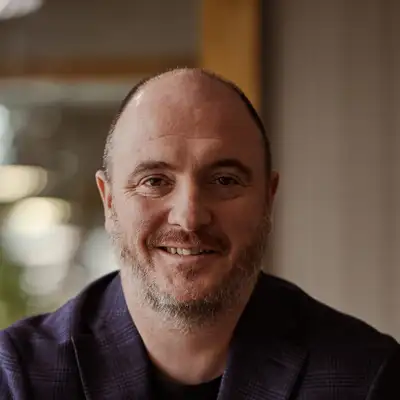

Beyond the Prompt: Ellen Choi on Firm-Wide AI Enablement
Attention: This is a machine-generated transcript. As such, there may be spelling, grammar, and accuracy errors throughout. Thank you for your understanding!
Matt Lescault: The most official, unofficial Sage podcast in the world. Every episode, we bring together Sage insiders, industry leaders, and global voices. Half of them deep into the Sage ecosystem, half of them bringing a perspective from well outside it for honest conversations about accounting, finance and technology that you won't find [00:00:30] anywhere else. I'm Matt Lesko.
Doug Lewis: I'm Doug Lewis.
Emily Madere: And I'm Emily Madere.
Doug Lewis: Let's dive in. All right. Now we're now we're actually to it. So I'm going to read this. All right Elon, I know you're probably going to hate it just sitting there listening to it. But I have to do it because it's actually much more impressive than most of the other bozos we have on here. So our guest today, Elon Choi, Elon, is the CEO and founder of Edgefield Group, a consultancy that supports CPA firms with AI onboarding and enablement to [00:01:00] drive growth and improve efficiency. She was named one of Accounting Today's top 20 top 2025 most 100 Influential people in Accounting, and a 2025 Most Powerful Woman in Accounting by CPA Practice Advisor, which is a daunting just reading this. She advises the profession as part of the AICPA Engage Tech Plus Planning Committee and cpa.com digital CPA Advisory Committee as a guest contributor for Accounting Today, and through regular speaking and moderating at leading alliances and association [00:01:30] events. Her past includes co-founding Iwin, a technology company that helps 800 plus accounting firms digitize and automate their practice management and tax workflows. At Iwin, she held roles of Chief Product Officer, COO and chief innovation officer for a four plus year period. She's a Stanford engineering alumna and a Harvard MBA. It's just getting more and more impressive as I go here. Who began her career at Google, of all places, automating finance processes and [00:02:00] improving business performance. Seeing how outdated tools slow down back office teams shaped your interest in building modern enterprise grade technology? Ellen, welcome. Um, I'm intimidated just from reading that, so yeah.
Emily Madere: It sounds like you take a sip of water.
Matt Lescault: Oh.
Doug Lewis: That is an impressive background. Impressive background. Uh, welcome, Ellen. I'm really excited to have you here today. An actual expert in the room here. And to kick things off, I got to know, since you're such an expert and you have this amazing pedigree behind you, how do you just flip the switch [00:02:30] and just, like, turn the brain off for a minute?
Ellen Choi: Yeah. It's hard. Uh, especially in today's society, right? I think all of us face this, uh, you know, we just have notifications, our smartphones. So one of my favorite activities is to actually meditate, like silent meditation. I've been on multi-day meditation retreats where there was no phone, no internet. You couldn't actually even speak with other people just because, you know, that sort of solitude and blocking out all [00:03:00] the noise and AI can be actually quite overwhelming. It helps me to be more grounded so I can show up as a better person that can actually help others.
Matt Lescault: I have to ask, how often do you do that?
Ellen Choi: Um, so I do, I meditate every day and I try to do a multi day meditation at least once a year, you know, and this is like 3 to 5 days. Um, that's not easy as a founder, CEO of a AI consulting firm, [00:03:30] you know, today because things are changing quickly. So that needs to happen, like during holidays or when things are a little bit slow. I've actually found that the first half of April and the first half of October are great times to take vacations.
Matt Lescault: I wonder why that would be. Um.
Ellen Choi: Yeah, I just yeah, I plan my life around tax deadlines at this point.
Matt Lescault: So last question on that. And when you go on these multi-day retreats, is there something you do completely by yourself or are these like led by a group or or organized by [00:04:00] a group?
Ellen Choi: Yeah. So I've done Vipassana retreats, which are retreat centers all over the world. And it is organized and, you know, it has a specific lineage associated. I've also done solo retreats that I just created DIY on my own at an Airbnb in a remote, um, you know, mountain where I'm just kind of imposing this, uh, discipline on my own. So different experiences, but similar outcomes in the sense that it does bring me a lot of clarity and just [00:04:30] kind of being able to block out the noise helps me in terms of being more, more strategic.
Matt Lescault: Yeah, very, very cool. Thank you for sharing.
Ellen Choi: Yeah, absolutely.
Doug Lewis: I think I would go crazy if I tried that, I really do. It's so impressive. I find that people can meditate, you know, effectively. It's just amazing to me. I feel like I would just sit there and just go nuts after like 60s, I can't do it. But it's really impressive that you can.
Ellen Choi: I was I think this is why this is going to be your next challenge. I think you've just named it, you know, here publicly for everybody. [00:05:00] So yeah.
Doug Lewis: Sure. Yeah, I'll, I'll make sure I update everybody on my meditation. That's what they want to hear from me. Absolutely. Um, Ellen so, you know, we're talking about artificial intelligence in the accounting world, all this fun stuff just to give people a little more background because your background that I read wasn't impressive enough. How many firms do you say that you work with on some level here?
Ellen Choi: Oh, um, I mean, I've, I've worked with, you know, double digits of firms and I, we usually [00:05:30] focus on mid-market to enterprise firms. So I would say, you know, ten people ish and above, although of course, um, we're offering some new services this year that is going to be accessible for smaller firms as well. But on the bigger side. Um, yeah. So, you know, I am really fortunate to have a lot of firm leaders that I knew from my island days. And, you know, we, I and I work [00:06:00] with a lot more informally, you know, in terms of the network and advice and sharing all of that. Um, so it's been a great experience.
Emily Madere: Do you work with firms all across the United States or are you centralized somewhere?
Ellen Choi: Yeah. So all over us, and actually we also work with, we have a client in Canada that's active right now. So now I can say we work all over North America.
Matt Lescault: Awesome. And I was when I was going to ask, had to do the fact that you said as firms at ten people. [00:06:30] And I think that maybe some firms at that size would think maybe it's not approachable for me, maybe this level of consulting and support is too expensive for me. And so I, I just like to hear a little bit from that perspective, not necessarily from a commercial, but sort of like, how approachable is this type of advisory services for the advisors?
Ellen Choi: Yeah. Right. Yeah. It's, uh, maybe some, some irony here. It's like a very meta. You know, we're advising the advisors. Um, [00:07:00] you know, you, you may be surprised at how it's actually, it's less correlated with size and it's much more correlated with, um, the leadership, the managing partners like will and determination to change. Um, and profitability, right? Because, uh, ten people CPA firm that is very profitable, has a really great niche and is really looking to, you know, level up their AI efforts. That firm might actually, I've [00:07:30] had deals like that go through much quicker than bigger firms with more budget. But, you know, there's a partnership and, you know, I think you guys have all probably seen this, uh, if you know CPA firms, you know what I'm talking about, you know, they're paralyzed or, um, you know, they can't really come to a decision to have this type of advisory service. And at the end of the day, you know, we are. We meet firms wherever they are and we offer holistic support, including training and training is very approachable [00:08:00] for everyone, accountants and advisors. Uh, you know, that's something that they're used to doing every single year with CPE. And so it's a very like, well known heuristic that we plug into for firms that are even, you know, sole props all the way to thousands of people.
Matt Lescault: Amazing. Thank you.
Emily Madere: And, and do you find that when you, when you approach these firms that, um, like, what's the percentage of them like actually excited and wanting to embrace AI [00:08:30] because sometimes, you know, when you think of accounting firms, you think of, you know, the stereotypical kind of stuffy, you know, not wanting to change. But I think that's changing. Yeah.
Ellen Choi: Um, so, you know, I would say that we've been all on this. I divide the AI times into pre ChatGPT and post ChatGPT, right? I mean, we've been talking about AI, you know, for a long time, but really like post ChatGPT and OpenAI, that's when things really [00:09:00] took off in terms of the progression of the interest and adoption. And you know, how AI is actually integrated into our work. So, you know, we've seen kind of the the step every single year in terms of more accountants understanding this is a way of the future. Um, you know, they experiment on it in their personal lives and they understand the impact and the potential on the work front. So a lot of experimentation, um, and it's very [00:09:30] uneven in the sense that, you know, you have people that are very curious and innovative all the way down to, you know, people that you have to kick out that are kicking and screaming and, you know, you have to kind of drag along in terms of going into the new age, like firms have people of all spectrum. Um, so, you know, we see this all the time, right? But what I will say is, you know, last year there was a lot of firms, at least pockets of people in experimentation mode, you know, much more, hey, let's just get some, you know, cool pilot license [00:10:00] and just kind of see, you know, how this thing works, you know, that's actually like try this other vendor. Um, you know, let's actually test some pilots.
Ellen Choi: Uh, you know, what I'm seeing this year is a conversation shifting yet again to really firms understanding that AI, it's no longer optional. Like, you know, if you want to thrive and succeed and survive into the future, um, adopting AI, you know, that that's imperative. And, um, the conversations actually even shifting from, [00:10:30] are you using AI to how are you using AI, right? Because, you know, people are understanding, I mean, there's a massive difference between using copilot for summarizing documents and using copilot to do some valuation analysis that used to take two days and you collapse it into two hours, right? Like people are starting to understand there's actually much more depth of how you use AI. So like where I'm starting to see the field kind of separate again, you know, from that perspective [00:11:00] and the firms that really get it, like they're the ones that are making that systematic progress and they, they are excited. Of course, there's a lot of security data, compliance concerns that are always happening. And there should be. These are, you know, really big problems, but they're all solvable problems. So, you know, even the accountants who are forging ahead and who are not necessarily the most, um, you know, forward in terms of, you know, because of all these issues, they understand that there are solutions out there. [00:11:30] And the best way to just kind of get going is to figure out the guardrails and understand what can be done within those parameters. So yeah, it's actually really exciting.
Doug Lewis: Do you see like, is there some kind of common event that really forces these accounting firms to actually pay attention to this? More like changing of like management, changing of leadership. I don't know, they lose some staff or they lose big clients. Is there anything that kind of drives these firms and just the light bulb goes off, or is it just [00:12:00] all over the board? Mixed bag?
Ellen Choi: Yeah, there are some. Sometimes when like major, like really major product announcements come out. Um, you know, as you all know, cloud is very buzzy this year, right? Like, you know, it's like cloud, cloud, cloud. Um, and part of it is because cloud cowork it's kind of the mass market, you know, authentic AI technology that's actually accessible and generating kind of that exponential value beyond just the chat interface. So when that came out [00:12:30] and, you know, we started to see accountants actually use it right away to talk about it. Like, you know, that was a light bulb moment for many people, right? So you'll have some of these really major tentpole announcements that trigger like a greater interest or adoption or curiosity. And then the other thing, honestly, it's just seasonality, right? So, you know, accountants were just really heads down until end of April. And then I think at that point, everyone just kind of poked their heads up and it's like, oh, the world like shifted again, [00:13:00] right? Like, so, you know, it's kind of like you go through these step function inflection points of seasonality and then, you know, people kind of see the before and after. And, you know, there are big changes and that's a trigger for people to, you know, learn, study, talk to their peers, go to events and figure out what the next step should be.
Doug Lewis: And that next step, because every conference, every webinar, everyone you talk to, everyone's talking about AI. And I feel like so much is it it's, it's like [00:13:30] 100, zero zero zero feet up in the air right now, like just very high level stuff. So what are you seeing firms actually implement in terms of AI? Because I think we're kind of in like the infancy crawling stage still of really doing it. So talking about it and implementing are two very different things. What's kind of the most common way firms really start implementing any type of legitimate AI tools into the practice?
Ellen Choi: Yeah. So there are kind of, you know, couple ways firms think about implementing [00:14:00] AI. One is kind of like the horizontal AI tool layer, which is copilot is definitely the most obvious and probably most, you know, well adopted beyond the free version that comes bundle the actual premium licensees, but you also have ChatGPT, you have cloud, right? These like horizontal AI tools that every single person at the firm can pick up and use and get value out of. So that's like one vector. Like, you know, we really start to see firms invest in this last [00:14:30] year, more firms investing in it this year. Um, and then the other kind of.
Matt Lescault: Are you saying, and I'm sorry to interrupt you, but are you saying that you're seeing more firms utilizing copilot than the than the other two? Is that is it more is that seems to be closer to them because they're all in office. 365 or I thought I heard something like that.
Ellen Choi: Uh, yes. Um, what I meant was actually, as a category, firms are picking and adopting, you know, them from. Right, right. But like between [00:15:00] all the tools, um, generally the, the bigger the firm, the more likely they're going to adopt copilot, the paid version of copilot as the firm wide tool of choice. And then you'll have pockets of people that have different tools like, you know, perplexity or clod or, you know, ChatGPT, whatever it may be. Um, smaller firms, a little bit of a different story, right? Many of them do actually go straight and adopt to adopt cloud, you know, enterprise or chat enterprise. Um, because those are actually [00:15:30] the enterprise tiers are relatively low. It's actually quite accessible for teams of even 20 people or, you know, 30, 40, 50 people. So, you know, we're definitely seeing, seeing that for sure. So it really depends on the segment that, you know, you're talking about on that front. And then the second way is really the vendors, right? Like, you know, firms think of adopting AI in terms of I adopted Blue Jay, right? Like that's the way that I am moving forward in terms of AI enablement, adoption. I'm testing, you know, [00:16:00] these tools and pilots. And, uh, as you all know, there is abundance of, you know, tech vendors that are, you know, AI native AI powered right now. So there is no shortage.
Doug Lewis: I'm not getting any, any emails or calls or anything about that.
Ellen Choi: But you clearly make it down to the exhibit.
Emily Madere: Nothing on LinkedIn.
Ellen Choi: Yeah. At AICPA engage.
Ellen Choi: Uh, which was just the most number of, um, you know, AI tech vendors. You know, I think we actually have a profession has probably seen in like forever, [00:16:30] you know, that that's my guess. Um, exactly right. So firms also think of adopting AI in that way. What's the tool that I'm adopting? What's the AI feature? Um, you know, so we're seeing firms make progress on that front too.
Matt Lescault: So one of the things that I think about in this question is there are so many people that are talking about AI, especially in the accounting space. I almost feel like it's it's too much. How do you know who's giving good information versus [00:17:00] bad information? How do you disseminate between the different talk paths that are happening today? And, um, sometimes I'm asked to talk about it and I'll, I'll say straight up, like, I think my knowledge is very minuscule to what you really need to know in order to make these decisions. So I'd love to get your perspective on that.
Ellen Choi: Yeah. So I think what's happening is, and you know, this actually is a premise of my starting Edgefield group. Well, when I was a full time executive at Iowan and [00:17:30] currently I'm an advisor. So, you know, I help on an advisory basis, but as a full time executive, what I saw was so many people talking about AI to accountants. Exactly. You know, to your point, Matthew, um, a lot of people are talking about strategy, right? Whatever that means means different things. Um, but nobody was like, there just weren't very many, um, people or firms that were helping them actually understand like, how do you get value out of AI? Right? Like [00:18:00] how do you actually get employees to use it every day and save time and, you know, go over the fear? Um hum. You know, be secure and compliant, like really those practical, you know, playbook, the devil's in the details, uh, you know, dynamics. So that's the reason, you know, I started a group because I just saw this really massive need to support firms in that last mile of AI enablement. So to your point, Matthew, like definitely a lot of people talking about AI to me. [00:18:30]
Ellen Choi: Um, you know, a lot of the talk tracks are pretty similar actually at this point, everyone's kind of saying the same thing in terms of what you need to do. Um, so for example, I think we all know that time and materials is, is, you know, especially vulnerable to AI disruption. Um, you know, so everyone, the recommendation is move to value based billing. Okay, great. How like, what do you actually do? What's the first step? Second? Like, no one's talking about that piece of it. So, you know, [00:19:00] that's really where we focus because we think that, I mean, that's where they're actually going to get real value out of AI and all of these things. Um, so I think in general, like looking for speakers or leaders who actually have very concrete practical tips or playbooks or, you know, step by step ways to actually approach a problem. Um, you know, I think that's the thing that accountants can look for when they're looking for help or support in terms of moving forward in [00:19:30] their AI initiatives.
Matt Lescault: And just to, to double down on this for one second, if you're on LinkedIn, when I go on LinkedIn, I see everybody's like, use this prompt to get this done. Or I'm providing as a solopreneur, I'm providing AI advisory services. How many? I guess maybe my question is, how many firms have you worked with that kind of work with those that level of people and just it didn't go well, or you came in and said, hey, [00:20:00] there's actually a different approach to this because my fear when I see that, and I don't want to speak for anybody that's out there, but my fear is like, we have all these people that are toting this expertise, and it makes me think or question the true expertise that's out there.
Ellen Choi: Yeah, I think it depends on kind of like what kind of expertise we believe is the most helpful for, you know, the clients, which in this case are accountants and accounting firms. And, you know, I think a lot of those [00:20:30] types of messages that I see, it's not that it's not valuable. It's, it's extremely like specific, like slice of how AI becomes successful, you know, within a firm or how accountants, accountants can succeed. You know, it's very important to understand like specific prompts and, you know, how something can give value. But if you don't have a great AI policy, if you don't have the guardrails, if you haven't taught your people the basics of, you know, how AI works, like that's just kind of like [00:21:00] solving a kind of a random problem in a very haphazard way, as opposed to, you know, approaching it in a much more systematic way of firm, wide enablement. So, you know, from our perspective, the work that we do is very holistic because really, and, you know, I, you guys have all seen this as well. Ai touches everything, right? You cannot it's not this is not just a technology problem. You know, it really disrupts many different parts of the business, the firm, the people, the [00:21:30] culture management, the the pricing model, the growth model, your technology stack. So, you know, you kind of have to look at it holistically from the perspective of how do we make the group of accountants, the firm, the team, like how do we make them successful as opposed to just equipping one person with one, you know, optimized prompt.
Doug Lewis: So, Ellen, what's the three worst vendors out? No, no.
Emily Madere: Um.
Doug Lewis: You know, when you start.
Ellen Choi: Sooner Or later.I'll tell you, but yes.
Doug Lewis: Yes, [00:22:00] yes well, over a drink you can tell me all the horrible ones and I'm sure there's more than three. But you know, when you start actually working with the firm on that kind of that, you know, that last mile, the actual implementation component of this whole thing, is there like a standard playbook there or is it pretty firm by firm, you know, is it unique? You know, what does it actually look like? Do you have like, here's a package. Here we go.
Ellen Choi: Yeah, I do. We have a package. It's called AI foundations. It was we designed it literally for this purpose. And it's the whole point coming back to it's very [00:22:30] interdisciplinary. We do AI governance and we do AI training for everybody. And we also do AI ready tech stack audit, right? So then like we're really looking at all parts of the business from a AI angle perspective. This is like for firms that are earlier in their really like AI readiness journey. And there are still many firms like.
Emily Madere: When you say earlier, like, what do you mean? Like, maybe they're just using like a ChatGPT to answer some prompts, [00:23:00] like, or they're not using anything at all.
Ellen Choi: Usually there are people inside using it. It's just not coordinated. Right? Maybe like some people have copilot licenses, maybe someone, one person has Claude and you know, they're using the free version to do some research. Um, maybe somebody has done some research on a vendor. Maybe there's an upgrade, you know, for Thomson Reuters or, you know, CCH. Um, that's like AI driven. You know, so it's a very like scattershot way of looking at things and there isn't real forward momentum [00:23:30] or progress. Um, so, you know, from that perspective, firms that have done that work of coordinated progress. Like I am starting to see more of a spread. You know, this year. So this year for kind of my this season's top track, you know, I, I actually ran what I call the AI game, which is a 20 point AI maturity assessment scorecard. So, you know, I had people in the room that gave themselves points if they met all these [00:24:00] specific criteria across foundation transformation or integration and transformation, like three different phases of AI maturity, transformation. And you know what I like fairly consistently. Um, the average across the board is, I would say maybe about 40% of the participants were in that 0 to 5 point category, that beginner category, right? Like 40% ish, and then another 30% in the second bucket of like, you know, 6 to 10, right? So [00:24:30] like, they've made some progress, but still early.
Ellen Choi: And then, you know, the rest maybe 20 to 30% in the the second half. Um, so what this tells me is that there are still a lot of firms at the beginning of the journey that 0 to 5, but that's like actually 40%. The majority are like have done some work and have made some progress and some are actually quite advanced. So there's just kind of this bigger spread that is emerging this year and it's only going to, um, the spread is only [00:25:00] going to grow bigger, right? Because firms that are really locked in, they're going to be making more and more progress as opposed to firms that, you know, aren't really doing anything coordinated systematically from a firm wide basis. You know, they're going to be standing still. And in 12 to 18 months, we're going to see the difference. And it's going to be hard for firms to catch up at that point, because as you know, it's not just about throwing money. Like these things take time, willpower, like people change management. So, you know, for firms next [00:25:30] year that are still in the 0 to 5 category, You know, I think that's going to be a shrinking category of firms and firms this year should be working on that.
Matt Lescault: I have to ask, is there a possibility there's a slight bias that the people that you're polling in this would be more likely to be using AI because they're in the room talking to you, and therefore that there's a possibility that there's a wider percentage of firms that would fall into that 0 to 5 [00:26:00] bucket. Is that is there a possibility of that?
Ellen Choi: Um, you know, I think maybe for a couple of the sessions. Yeah. Yes. As in, you know, when I spoke at AICPA engage, they can self-select themselves into attending my session. Right. Um but other ones are, you know, it might be a alliance AI keynote where like every member, you know, for everyone is in the, in the room, um, you know, as part of the keynote. Right. So it's not that, you know, they're opting in per se. It's much more that like this group of people, which definitely [00:26:30] has like the spread of AI maturity. You know, they're all sitting in the room and I'm running this game and the simulation, so, you know, yes and no. But I think I ran this multiple enough multiple times, um, to see a pattern here.
Matt Lescault: Yeah. And, and I'm not, I'm not questioning the data that you have. I think that I think whenever I have a small experience in the polling world, and I think that even firms that are probably attending these conferences [00:27:00] are more forward looking firms. And I think the only thing that I that I wanted to potentially get across is I think there's a wider a larger percentage of firms that need to be listening to this right now, listening to what you're talking about, and really thinking about how they're going to invest and stay, stay ahead. That's just my hypothesis.
Ellen Choi: Upgrade.
Doug Lewis: On the on the investment thing. I want to get into kind of like human control in a minute here. But on the investment component you just brought up there, Matt. Ellen, I got to know because I get, I don't know, like everybody, [00:27:30] I get, you know, 50 to 100 just cold emails a day. Just most of it's just slop that is clearly generated by AI. But I always love the claims. That's like my AI enabled workflow system will ten X your revenue in three months or whatever. You know what I mean? Like, yes, obviously you can spot the ridiculous ones like that. Anyone can. But how should firms be looking at some of the ROI claims that, you know, these vendors are pushing on them right now?
Ellen Choi: Yeah, it's a very it's a very noisy time [00:28:00] right now. As you know, there's a lot of marketing hype, um, you know, from everybody. And it's not always some are more true than others, as, you know.
Doug Lewis: Name names, name names.
Ellen Choi: Yeah, yeah, yeah. It was, it was interesting. I was having, um, you know, this conversation on, on ROI, um, you know, with a group of firm leaders at one of these conferences that I was speaking at and, you know, so ROI return on investment, [00:28:30] right? So then let's look at like every single component of that. You know, let's start with actually the investment piece. Like what are you actually investing? Um, and I think it's, uh, I think one of the topics that you and I had discussed was this idea of like, oh, you know, what should firms, you know, budget like, you know, for all this AI stuff? And I was like, wow, that's what a cute idea that you think firms actually have a budget for AI and technology, right? As you know, they don't, right. Like, you know, they don't have any budget. Like usually [00:29:00] it's like the partnership going in or the managing partner saying, we have to do this. And you know, we're just going to spend the money, whatever it is. So, you know, there's this, it's a, it's an investment piece. You know, firms haven't really professionalized what that is, what that means, you know, like what's a and nobody likes taking costs, you know, out of the comp, right. Partner comp and you know, what does that actually mean? And then the other thing on the investment piece is, uh, you know, usually people think of investments so far [00:29:30] in technology as just like the technology licensing cost. But with AI, it's very different in the sense that it's unfortunately going to be probably higher than what you want it to be or expect it to be based on your prior sort of investments into technology, because there's so much more in terms of like people enablement, you know, setting up governance layers.
Ellen Choi: Like there's a lot of hidden costs of having AI really be successful and working well within a firm. So really the investment [00:30:00] piece, like, you know, thinking through it very holistically, right? Understanding investment isn't just a technology license. It's actually like, you know, upskilling our people. It's swapping out certain parts of our technology stack, not just the apes, you know. So that's the eye of the ROI. So then let's look at the return. So the return piece is also, you know, it can be quite tricky as well, right? So one of the, I think the most obvious benefit of AI is that it helps accountants [00:30:30] save time. Like that's obvious, right? Like it's like a very like productivity, you know, driven narrative. And that's great. But you know what we tell our clients when we go in and we do all this AI training and enablement is that I'm very confident that we will save, you know, your people time. Actually a lot of it. What I don't have control over is if your people are spending time scrolling TikTok or they're doing revenue generative work, right? So there's a lot [00:31:00] more work that needs to be done to realize the R, the return piece of this ROI, which is are they working on strategic projects? You know, do you have cross-sell pipelines? Um, you know, do you have new clients that are ready to go? Do you have new advisory services you know, that you can be offering? What does that transition look like? There's probably more cost in setting all of those things up to generate those revenues.
Ellen Choi: So actually saving time is really quite easy and straightforward, monetizing that that's [00:31:30] really, really hard. And a lot of firms, we're still in the early innings of really figuring out what that looks like for us. Right? So the return piece is very, very tricky indirect right now as well. And then the other thing about the return piece is there's so much qualitative component to this right now. You know, Doug, to your point, like still being an early innings, right? As much as we wish that things were more baked and more certain, you know, as it is, it's just not technology. Ai is just [00:32:00] changing on us like really every day. Right? So some of this is just kind of the return is actually you're investing into this future benefit and upside that you can't really quite measure today, right? But you have to keep up, otherwise you're going to fall behind. So I think a lot of accounting firms and leaders, they sometimes struggle with that because we're numbers people, right? We want things to be black and white. We want to like tie things out and you just can't like, you know. So I think that the firms that have been the most [00:32:30] successful are the ones who really understand this at the leadership level, and they're able to make decisions, understanding that it's a little bit of a leap into the unknown. But that is a business decision. That's the job of a leader. Um, you know, to really like see around the corner and be strategic and understand like the competitive dynamics here as well going into the future.
Matt Lescault: One of the things that I saw on your website, um, because yes, I do do a little research before I get on these calls, uh, was, and I might get it slightly wrong, so [00:33:00] please, uh, correct me.
Doug Lewis: You probably will.
Matt Lescault: Is that one of the missions or the goals of your consulting firm is to give team members back 20 minutes a day, I think is what it said.
Ellen Choi: Minimum. Yes.
Matt Lescault: Yeah. And I think that was a really I felt that was a really easy to comprehend, not not something that is that you you you question its credibility. It seems.
Doug Lewis: Outrageous. Like, yeah, you get six hours a day [00:33:30] back.
Emily Madere: Right? Yeah, yeah.
Matt Lescault: And it and it felt like something that was attainable. Can you tell me like where you, you know, where that came from? What the, what, the why behind that? So if I'm coming to you as a, as a customer, why is that the goal that you set aside and, and, and, and just talk me through that.
Ellen Choi: Yeah. So, um, you know, fun fact, we're, we're in the middle of a massive redesign of our website. So this usually happens, you know, every 6 to 12 months. [00:34:00] Um, because what, because AI is changing so quickly, the services that we actually offer the value prop, the benefits actually change as well. So you know that I think that is rooted. Exactly. Matthew. Like, I think you hit the nail on the head, which is, um, you know, you gotta meet people wherever they are and it needs to feel attainable, right? It needs to feel approachable. It's not like a completely, you know, outrageous, um, you know, pie in the sky, like saving six hours a day with this, [00:34:30] you know, uh, funnel sales funnel to like the emails that Doug. Ah, um, Doug is getting. So, you know, that was really the genesis and like, uh, you know, we knew that from all the work that we've done with firms, um, saving minimum of 20 minutes on average a day was just table stakes. Like we could absolutely do that with, you know, all the use cases and the really specific workflow applications that we, you know, have really, um, designed and created and [00:35:00] generated for teaching purposes for, for our firms, you know, so that was really sort of the, the genesis.
Ellen Choi: And I, I think up until this year, the conversation around the benefit of AI has been around productivity and time savings, you know, so we wanted to really speak directly into that because, because we don't need to convince people of that. Like they kind of already know that, you know, AI will make them more productive. The question is exactly how you know and what's the benefit this [00:35:30] year? Um, I do see the conversation broadening out from benefits of AI from just productivity to much broader, like client experience, um, revenue expansion, market expansion. And this is happening because, um, our accountants are our customers and clients, like their clients are coming to them, right? Like they're trying to have these conversations with their clients, you know, as trusted advisors. So I think we are at a period, um, this year, [00:36:00] kind of a real sort of inflection point of, you know, what we need to look at AI much broader than productivity savings, which is what's on the website. And one of the things that, you know, we're really updating is to really showcase the value of our work, you know, beyond just a specific like time metrics, which is very concrete, which is it's a starting point. Um, but there's so much more.
Emily Madere: So, uh, I got an email today where, um, we're trying to win some work and the client is specifically [00:36:30] asking how do we use AI within our firm? So I think it's going to even more than what you said, uh, by, you know, winning work, new work. Um, um, because if you're not using AI. Yeah. Um, anyway, that was, that was an interesting, very timely to this conversation.
Matt Lescault: Yeah. And going back to that question, Emily, where I was going to go is I wanted Ellen, your opinion on and I'm not picking [00:37:00] on clay. So Emily works for Clay. And they just announced that they were going to invest 500 million in AI and technology. 25% of their, uh, annual revenue. I don't know if they give a time frame. I'm sure they're not going to spend 500,000,000 in 1 year, uh, over it. But what, what does that tell you about where the industry is going from an AI investment perspective and sort of some of the things that you said earlier in this conversation?
Ellen Choi: Yeah. You know, we've seen [00:37:30] these announcements in the last, you know, I think 18 months, right? Like the big four certainly have not been quiet on this front at all. Uh, you know, I think we've seen all sorts of announcements. Um, you know, PwC saying like they're using 200, you know, tax agents. Um, and, you know, these are investing billions, right? All of them have, you know, said, um, you know, they're investing billions in the top ten like Klas of the world. Um, you know, RSM, BDO, they all have, uh, [00:38:00] you know, press releases that talk about, um, hundreds of millions to billions that they're investing into AI and, you know, for what purpose. So definitely we've, you know, we've seen this and what we've seen is that yes, like many of these firms, they are investing that money into quote unquote AI. But like the definition of AI is broader than that in the sense that, uh, you need to modernize all your data infrastructure if you actually really want your [00:38:30] AI to be the most effective, right? Like that amount is getting lumped into the billions in investment, which is probably work that they would have done anyway. Like in terms of their technology budget, right. So some of this is absolutely, it is like very necessary for AI, but it is also kind of what would have been more traditional, you know, technology budget. Now that's getting all lumped in because it's the arms race. And, you know, people read headlines and it's like, oh, you know, if they are saying they invested [00:39:00] hundreds of millions and we need to put out a press release and talk about this. And, you know, and it's effectively they're doing it already. And, and they are spending more on AI, obviously, like AI agents, cleanup work, development shops, things like that. Ai engineers, uh, you know, AI teams. Um, but I like, you know, from our perspective, what we see is those, those headline numbers are not as, as great of a leap. Um, you know, as 1st May believe, if you kind of look at what's happening [00:39:30] in the background.
Matt Lescault: I'll tell you one of the concerns I have, and I love your, your comment, which is a little bit outside of this conversation, is some of the things that we're hearing right now about how pricing of technology, like hardware is going up, the iPhone is going to go up by 200 bucks a pop, right? Laptops are gonna go up by $500 that the you the API usage fees are going up. And it feels like as much as we may save on productivity, that the access to an ability to invest is going to start to [00:40:00] shift and only be available to some of the largest organizations. And it concerns me because I always thought AI, as you know, that Evener, you know, that it created a more even playing field for the business community. What's your thoughts there?
Ellen Choi: Yeah, I think cost is definitely one of the biggest storylines this year specifically, right? Like AI cost because we have now like some real AI [00:40:30] consumption token costs, um, you know, that are getting added back to our bills. And part of the reason is because the models are getting more sophisticated. They are just more, you know, energy and consumption hungry. And these companies can only pass down their, uh, you know, the savings for so long to us from, from a market share perspective, right? Like the money they raised, uh, you know, from VCs and such. Um, so you're kind of starting to see, you know, [00:41:00] uh, kind of all the impact of that. So absolutely. One of the things that so we have a cloud, um, foundations, you know, for accountants that we teach. And one of the things that we bring up, you know, relatively early on is, um, token optimization or usage optimization, right? How do you actually efficiently use different types of models for the right type of tasks? Because you don't need to use the most advanced model to ask, what day is Easter going to be next year? Right? [00:41:30] Like, you know, right. Like, so it's like, so it's some of it is education in terms of how do you actually most efficiently optimize for cost in using these models so that you're really doing the 80/20 and the costs don't, you know, get out of control so that it is accessible to smaller firms who don't have those really large budgets? But what you know, what I will say, like even the enterprises, like, you know, their budgets are going out of hand.
Ellen Choi: So they're imposing all these best practices and caps and things like that as well to their employees. [00:42:00] Right. So, you know, really, we're getting to a world where you're looking at human budget and AI budget, like almost like in a very like label, you know, fungible way, right? So the most productive humans will get the greatest, greatest amount of like AI budget to be, you know, actually like real that. So really like looking at it from a performance management perspective. Um, and then the last thing I will say is I think this is why actually the open source models are really interesting. And I keep joking [00:42:30] with one of our clients that we're just going to set him up with a bunch of Mac minis and put agents on it. Source models. Um, because I actually do think that that is a really interesting, very cost effective, viable way for smaller firms and probably bigger firms to right everybody, um, from like a, like a AI cost and, um, productivity and features like management, dynamic perspective. I, I have a whole article in my head that I'm going to write, I'm going to call it on [00:43:00] prem 2.0. It's going to be like.
Matt Lescault: I was just going to say, I mean, I think what you're saying for anybody that's, that's not picking up on is like, there's an opportunity to, to repurpose some of your old infrastructure that's now not cloud based. That server based infrastructure to self deploy open source AI to automate certain more of the basic tasks and not utilize the cost of tokens. Is that is that the correct way of putting that?
Ellen Choi: Yes, but I really, I just I want to be extremely [00:43:30] careful that people don't take away the message that they don't have to move from on prem, because that is absolutely not the case.
Matt Lescault: So.
Ellen Choi: So don't don't quote me on this. It's going to be like a whole different type of local server optimization. I don't even know if those server equipments would actually work really well or properly right for this purpose as well. Right. Um, so it's like a very different way of looking. Yes, but it is like, I think for a long time we've been, um, hitting people over the head with [00:44:00] go to the cloud and be cloud based and all of that. And I do find it a little bit ironic that, you know, now some of them, if you look at the cutting edge people in Silicon Valley and what they're doing, and, you know, I've been experimenting on this as well, like just even with the old laptop or, you know, buying a Mac mini, right? It's like this, like it's actually extremely like cost effective way to have very advanced technologies like at your fingertips.
Matt Lescault: Okay. That's very interesting.
Emily Madere: Yeah.
Doug Lewis: So if I'm picking this up correctly, which, you know, there's [00:44:30] a 5050 chance I'm not, it gets pretty complex, pretty quick to actually sift through all the AI implement it properly, you know, keep it up. All this fun stuff, not only just the cost, but, you know, the people, the change management side of things.
Emily Madere: So the governance.
Doug Lewis: The governance, the stuff that you don't see on the tag of the license. I am not a Marvel fan. Okay. And the reason I'm not a Marvel fan is there's too many movies, there's too many TV shows, prequel sequels, offshoots. I don't know where to start anymore. [00:45:00] So is that kind of similar to AI? I'm thinking if Fermi hasn't done anything yet, like I got options, I got vendors, some are great, some are bad. I don't know what to start with. What would be the recommendation for you for a firm who's done absolutely nothing yet in terms of implementing AI? Where would you start? What would be that first piece?
Matt Lescault: And before you answer this, Elon, obviously Doug doesn't use AI because if you just went to AI and asked what the best way to watch all the Marvel content and whether you want in chronological [00:45:30] order or if you wanted an release date, you would know how to how to approach it.
Emily Madere: But if it did start getting bad, they started getting bad.
Doug Lewis: I don't know. I'm not legally allowed to use AI, let's put it that way. It's part of my it's for my probate.
Doug Lewis: But don't worry about it.
Doug Lewis: Go. Go ahead. Alan. It's day one. Step one. What are you doing? Where can I sort through something?
Ellen Choi: Okay. Yeah. Um, start. Start using copilot for the whole firm, the paid license, and train your people, like [00:46:00] on kind of like each specific tool, especially the Excel piece of it. Um, because that's where accountants spend most of the time, like literally, like if you've done nothing and this is like the first step. And then in parallel, create an AI policy. Almost all firms have some sort of AI policy today. The question is when has that been updated and do employees actually know about it? Right. So then that's really what you want to optimize for here, which is update it for today should include, you know, authentic AI technologies we usually recommend for our [00:46:30] clients, you know, have your people sign it like once a year so that it's a very active, like participation of I have read this policy and I mean, I'm like, quite honestly, it's changing so quickly. So you could even argue for six months, but most firms actually do have like an annual write policy, updating training cadence. So, you know, that's a good time for that, right? So, um, you know, update your policy. Have people read, actually read it, understand what it means, including all the data classification tiers and then those. That's a really good starting point [00:47:00] for firms that are at the very beginning.
Doug Lewis: And who inside firms should be kind of owning the artificial intelligence, you know, layout, roll out, whatever you want to call it. Is it always the managing partner or C-suite, or do you find it's best to go with an outside hire? Use a group like yourself, which I'm sure is option number one. You know what, where, who should be really running this thing? Because, you know, I work with a lot of firms too. And oftentimes the managing partner CEO might be a smart individual. However, they're [00:47:30] clueless about a certain aspect of running a firm.
Ellen Choi: Yeah. So what I will say is the, the will and the desire for the transformation needs to come from the very top. It needs to come from the managing partner. It needs to the conviction needs to come from, you know, the CEO, the, you know, partnership, whatever it may be. So that is literally the biggest success criteria of whether any sort of AI initiative succeeds or fails. Right. And then below that, then you have the actual [00:48:00] like execution, which should not be owned by that group of people, right? Like AI execution, decision making, we see like AI committees, which are good for like collecting feedback and, you know, getting sort of like bottoms up, um, input and then, you know, having a really clear decision making trail from that, from that on the execution side. And that usually tends to be, you know, the CEO or the CIO or like the, you know, head of AI, which usually ends up being like, like a tax or [00:48:30] audit partner who really likes Claude. And all of a sudden they become like the head of AI, whatever it may be, right? Like, you know, there needs to be some really clear sort of like step ladder for AI decision execution. So, you know, that's a model that we've seen work.
Doug Lewis: It's interesting. It doesn't sound like there's like a, here's the best way to do it. It's kind of like figure it out for your firm, which is, is tough.
Ellen Choi: It's a little bit different because of the firm. Right? It really depends on the firm. Depends on the dynamics of the leadership dynamics. You know, who [00:49:00] owns what. And, you know, because partnership structure isn't necessarily it could have different levels of corporate, you know, sort of like leanings. Like, you know, that's what we go in and we have to really take a look and be able to say, this is sort of what we think makes the most sense for you.
Doug Lewis: Love it. And kind of last piece I want to hit on because we've stolen too much of your time. I've been very, very nice about this whole thing. You know, when we look at artificial intelligence rolling out in the accounting world specifically, a lot of it is very transactional focused, you know, back office productivity [00:49:30] focused. Like we've kind of been talking about the easier, repetitive tasks. How are you seeing, you know, the best in class firms implement some of these tools while also keeping a human connection with the clients and honestly, internally with the other staff, you know what I mean? Is there like a good way to kind of blend this all together to roll it out where you don't lose that one on one relationship, whether it's, you know, internally with, with your team, your staff, your partner group or externally with your client base.
Ellen Choi: Yeah. Um, you know, we always emphasize [00:50:00] like, first of all, you know, copilot is called copilot because, you know, you still own you're accountable for the end product, you know. So I think you start out with the human accountability of anything that you're from. Ai. Um, so you know that that's one layer in terms of clients, you know, we actually believe AI helps accountants be more client centric, be more trusted advisor, like, because think about how much of the time is spent on manual work. If you can actually eliminate [00:50:30] some of that manual work that 20 minutes on average save per day, like what if you put that back into talking to your clients, like really understanding their needs and actually like, you know, thinking more deeply about kind of like their, you know, emails and responses, things like that. So like all of that time actually is extremely additive and directly helpful for having a more client and human centric relationship.
Doug Lewis: It makes sense. Um, and I'm sure it's just that easy to implement just to keep that right. Just that easy. All you need is that, [00:51:00] that ten second snippet there. Um, Ellen, I really appreciate your time here. Would love to hear your kind of closing thought. If I'm a firm leader right now, whether I have started my AI journey, whether I'm thinking about it, talking about it, I'm deep down, wherever I'm at in the process. What would be the kind of one takeaway you hope a firm leader would get from this discussion today?
Ellen Choi: Uh. Don't wait. Start now.
Doug Lewis: Start now in higher, higher edge field group. That's you. Try that one again.
Ellen Choi: Short and sweet.
Ellen Choi: Not me. [00:51:30]
Doug Lewis: So yeah, yeah, that sponsorship waiting on that check. Uh, could I come through? So don't worry there. Uh, Ellen, thank you so much. We usually end these things with a terrible dad joke. Usually it's me, unfortunately, but I always love to throw it out to the guests. Do you have just a terrible dad or mom joke on standby here?
Ellen Choi: You know, I was so engrossed in this conversation that I didn't. I wasn't able to come up with one. But you. I believe in you, Doug. So.
Doug Lewis: Okay.
Doug Lewis: Um. Let's see. We've been doing a lot of, like, technology discussion [00:52:00] AI stuff, so, uh. Okay. Why did the computer get cold?
Ellen Choi: Okay. Why?
Doug Lewis: I don't know. I'm asking you, why did it get cold?
Ellen Choi: I don't know. Why did it get cold?
Matt Lescault: Matt virus got a virus.
Emily Madere: Oh, I like that one.
Doug Lewis: Good guess, but you're wrong. It left the windows open.
Emily Madere: Okay, I'm hanging up.
Matt Lescault: I like mine better.
Doug Lewis: Come on now. It [00:52:30] left a win. Oh, you guys are no fun. Ellen, thank you so much for joining us. I feel it's impressive you found a way to make me feel even less intelligent than I really have to do some more homework on some of this stuff here. So, uh, very informative, very helpful, uh, very exciting stuff here. And thank you for joining us. And we hope to have you back in the near future here to see some of the changes that actually implement inside firms.
Ellen Choi: Thank you, thank you, thank you.
Doug Lewis: Thanks, Ellen.